Which tool fits your routine?
If you already own a dryer, a separate brush may fill the gap. If you want several finishes from one handle, compare the attachments you would actually use. More pieces only help when they suit your hair length, routine and available space.
| Method | Useful for comparing | Before you choose |
|---|---|---|
| Dryer + manual brush | Drying and shaping with two separate tools. | Brush size, grip and whether you are comfortable coordinating both hands. |
| Hot-air brush | Airflow and a brush in one tool. | Barrel shape, weight and the exact damp/dry starting instructions. |
| Heated iron or wand | A selected bend or curl using a heated surface. | Barrel diameter, clamp versus wand, and the model's hair-condition directions. |
| Multi-styler | Several drying or styling functions in one system. | The actual bundle contents and compatibility of replacement heads. |
| Heatless ribbon or rollers | Setting hair around a non-electrical form. | Hair length, fastening, setting time and whether the format feels comfortable. |
A heated brush and a hot-air brush are different categories: the word “brush” does not establish airflow or wet-hair suitability. Our styling tools and products guide also separates electrical functions from styling cosmetics.
Check the exact attachment, not just the brand
Before ordering a diffuser, replacement barrel or brush head, record these four details from your existing device and the listing:
- Device model and generation. Keep the model code, not only the product-family name.
- Compatibility list. Look for your exact model in the attachment manufacturer's information.
- Selected bundle. Compare the contents of the option you will buy; promotional images can show other configurations.
- Regional version. Check the electrical rating and intended market separately from the mechanical connection.
Dyson's Airwrap accessory catalogue is one manufacturer example of separate barrels, brushes, dryers and storage. Use the compatibility details for the particular part; a matching colour or family name is not a fit test.
Choose a heatless format you can actually wear
A long ribbon needs enough hair to wrap around it. A small roller for a fringe serves a different purpose from a two-sided ribbon for the lengths. Check the fastening and how you intend to spend the setting time before choosing an overnight-style kit.
For a concrete example, the Kitsch charcoal satin set instructions start with damp or dry hair, wrap each side around a ribbon and secure the ends with scrunchies. That particular page lists two scrunchies and says the securing claw clip is separate. Those details do not describe every kit.
A finished-curl photograph cannot tell you which method produced it or promise the same result. Compare the set's own demonstration with your hair length and starting condition. Keep a simple fastening you already own if it does the required job; a matching accessory collection is optional.
Check the practical fit before checkout
Read the exact voltage, plug and regional-use guidance. A plug adapter changes the connection; do not assume it converts voltage. Follow the device manual rather than applying another model's temperature or wet/dry instructions.
- Handling: compare tool weight, handle grip, button position and cord reach.
- Hair length: consider whether the brush or barrel can reach the section you want to shape.
- Everyday use: check cleaning access and where the tool will cool after use.
- Travel: check the rating, destination supply and manufacturer guidance before packing.
Give each tool a practical home
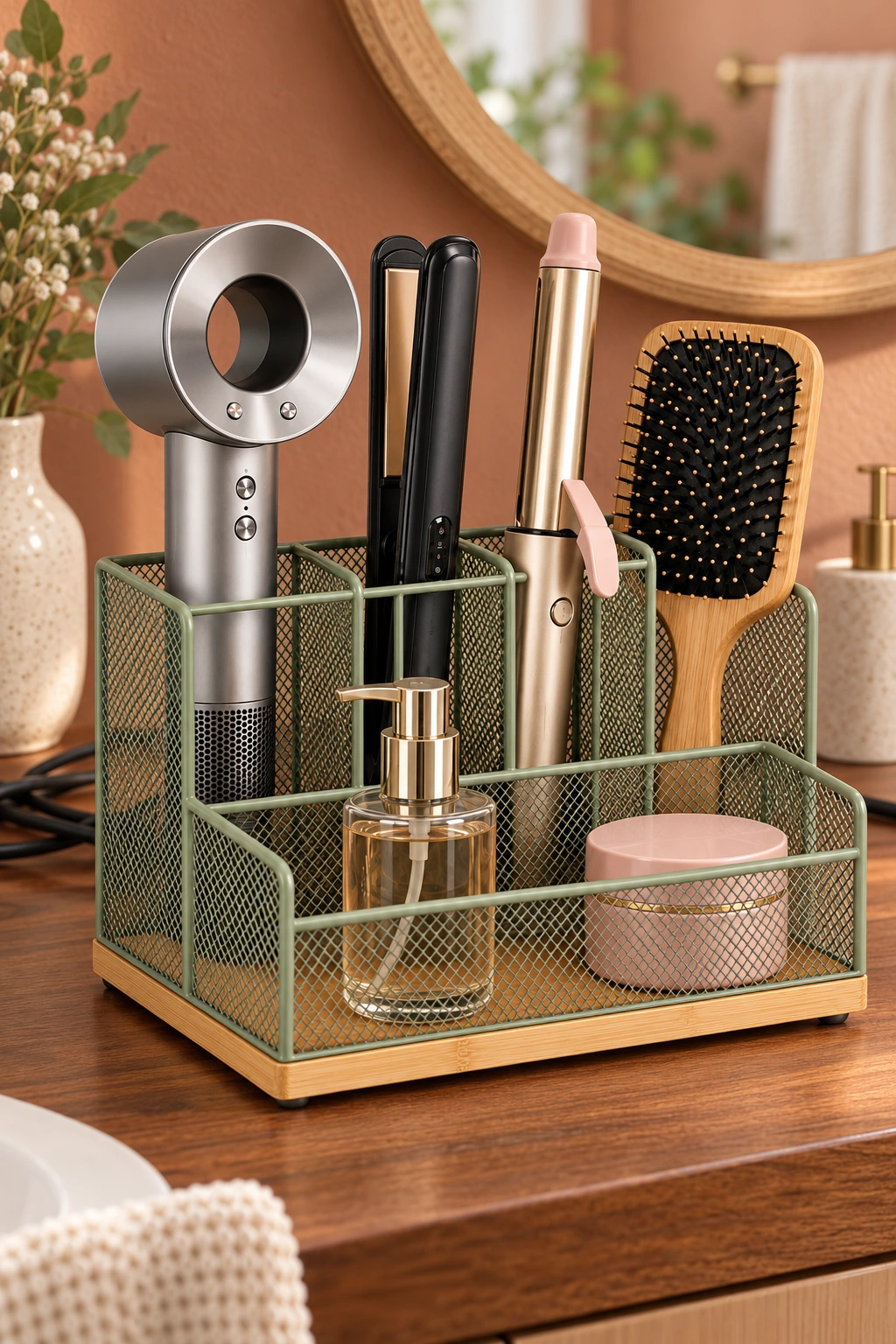
Choose by access, not by the number of compartments. A countertop caddy suits tools you reach for often. A divided drawer can keep several cooled tools together without taking over the counter. A pouch suits a smaller kit, provided it fits the device and its storage directions.
- Measure the complete tool. Include the handle, widest head, plug and space for a relaxed cord, then check drawer height as well as length.
- Separate cooling from storage. Switch off and unplug after use, and follow the tool's cooling instructions before enclosing it.
- Leave the cord unstressed. Do not force a tight bend where it enters the handle or use the plug to pull a tool from a compartment.
- Keep the working kit small. Place frequently used heads within reach; keep spare attachments labelled with their compatible model.
The Conair Double Ceramic curling-iron instructions, for example, require unplugged, cooled, dry storage and warn against wrapping the cord around the iron. Follow your own model's manual for its storage requirements.
Keep electrical tools away from water and do not treat an organizer as a place to operate them. For the non-electrical side of the routine, see towels, caps and wash-day accessories.
A few buying questions, answered
Do I need a multi-styler if I already have a dryer?
List the finish you cannot currently achieve comfortably. Compare a separate brush or one suitable tool with the attachments you would use in a bundle. Do not buy a system solely because it has more heads.
Can a separate diffuser fit any dryer?
Do not assume it will. Compare the exact fit information, connection and approved models. The shape in an illustration is not compatibility evidence.
Will a heatless kit work overnight?
The setting time, starting condition and comfort depend on the format and your hair. Use the specific set's directions; a photo of waves cannot establish wear time or hold.
Editorial comparison, updated 28 October 2026. Manufacturer references describe their own products. We have not performed hands-on device testing; pictured items are generated illustrations, with shopping alternatives labelled separately.