The cut collection / Layers & long · Long
Long hime cut with blunt side panels and a full fringe
Blunt cheek-to-jaw side panels and a full straight fringe sit beside much longer lower lengths. The visible disconnection is the design, rather than a gradual sweep through face-framing layers.
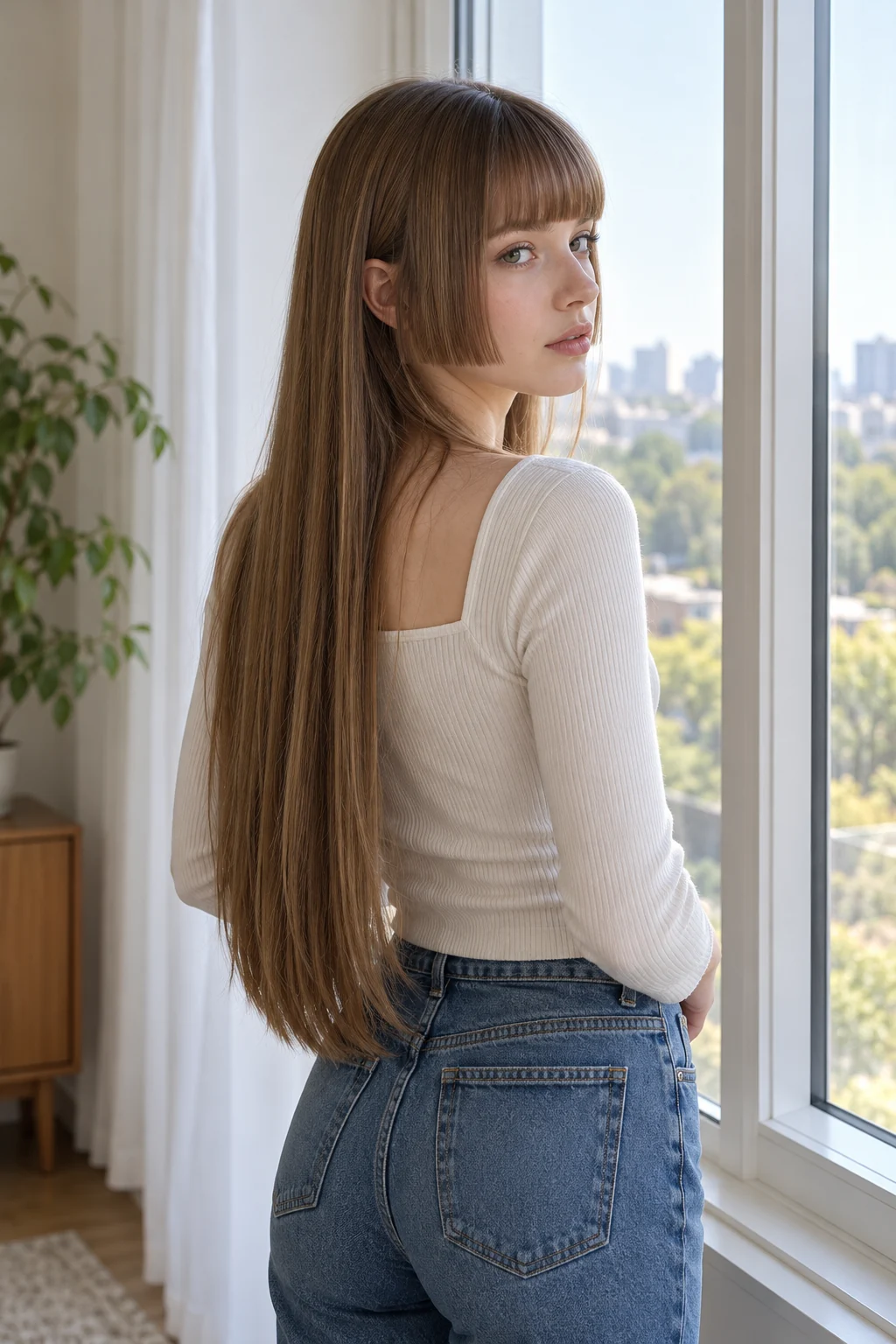
Your salon brief
Show the photo.
Then talk it through.
I want the blunt side panels and full fringe kept clearly distinct from the long lengths. Please mark the panel width and cheek-to-jaw endpoint on both sides before cutting, and discuss how my usual part would affect them.
- How much hair would go into each short side panel?
- Where would the panel ends sit when my hair is dry?
- What would the short panels do when I tie the long sections back?
Reference 30 of 40 · a generated photo for a salon conversation, not a guaranteed result.
What defines it
The shape
The front has three distinct landmarks: fringe, side panels, and long hair beneath. This generated reference makes those steps visible, but you need to choose the width and dry endpoint of each panel with your stylist.
The long blunt cut with full bangs leaves out the short side panels. The jellyfish cut extends a rounded short cap around the whole head, while the hime reference concentrates its short blunt sections beside the face.
Your hair, your routine
Before you book
- Panel density
- Discuss how dividing hair into the fringe and side panels would change the fullness remaining in the long sections.
- Blunt landmarks
- Choose cheek or jaw endpoints deliberately; they are visibly different decisions even within the same haircut name.
- Panel grow-out
- The short panels need time to join the long lengths. Ask how you could soften the steps if you later wanted blended framing.
- Separate arranging
- Consider whether positioning the fringe and both panels independently fits your daily routine, especially after wearing the hair tied back.
Day to day
Styling and products
Optional. The haircut itself is a salon service.
Arrange the fringe, then let each side panel fall freely before placing the long lengths behind or beside it. Check with your head level so the shorter edges are judged without stretching them or pulling the panels forward.
The listed optional detangling brush is a handling choice for the long hair and shorter panels. Follow its directions and release any tension before assessing the panel endpoints; brushing is a handling choice, while the deliberately disconnected sections and blunt edges are created in the salon.
Similar alternatives, not the exact pictured products.
-
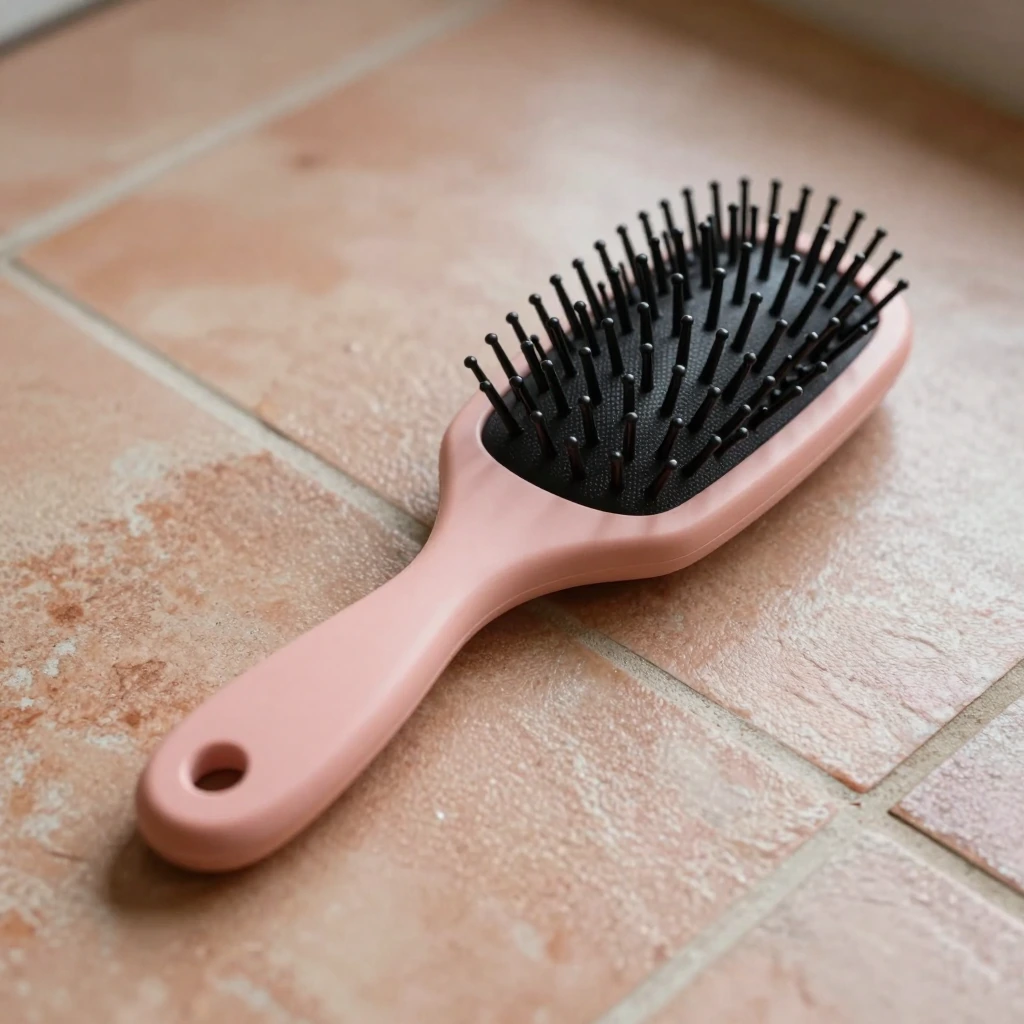
Wet Brush Original Detangler, Pink Frost
What to check
Similar cushioned detangling brush in Pink Frost, with an oval head rather than the broad illustrated paddle. Choose for gentle section-by-section detangling; it is not a heated styling tool or automatically suitable for every wig fiber. Follow the brush and hairpiece directions. Some review feedback concerns durability.
Keep comparing
Similar cuts
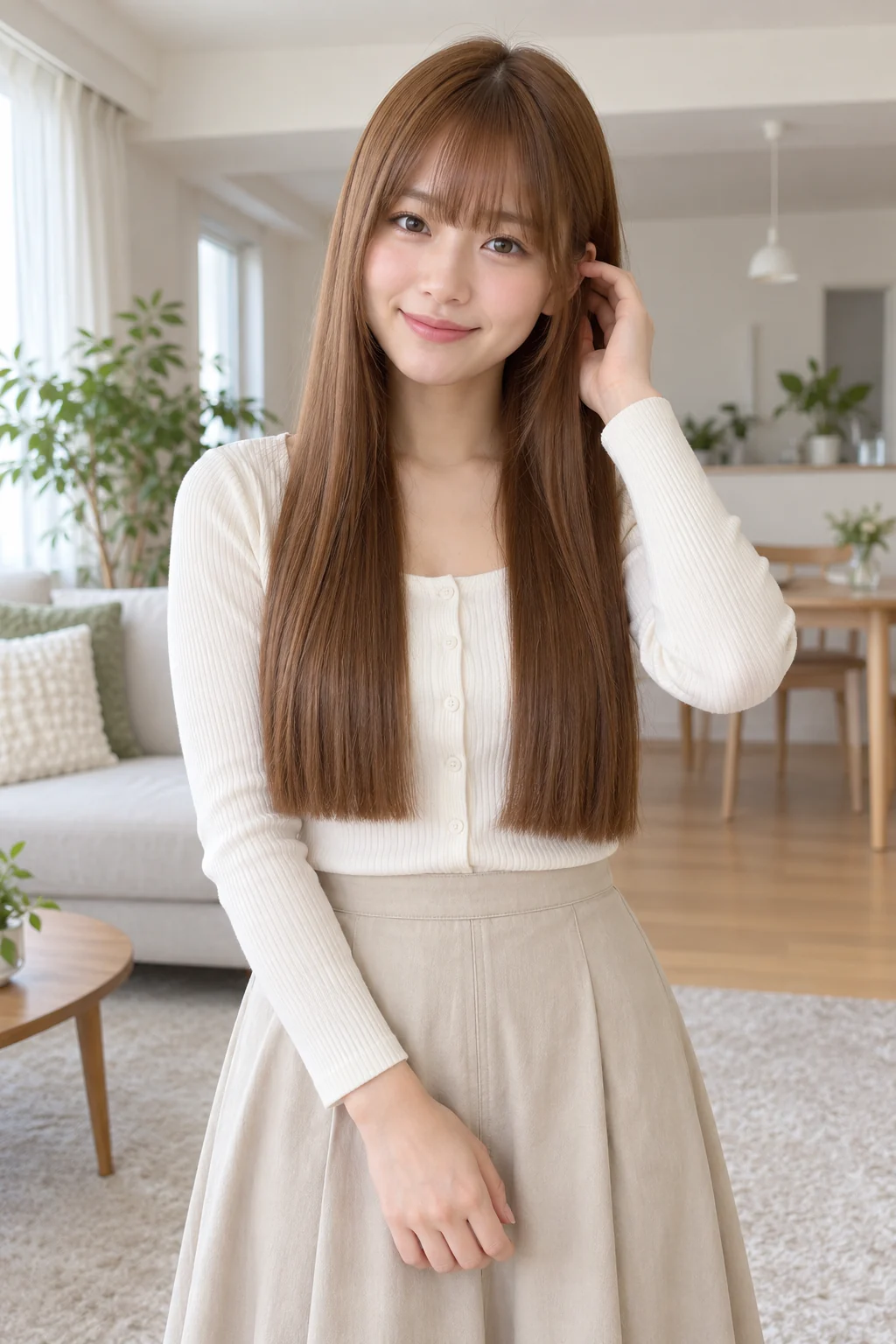 Long blunt cut with full bangs
The long blunt cut has full bangs but no short cheek-to-jaw side panels.
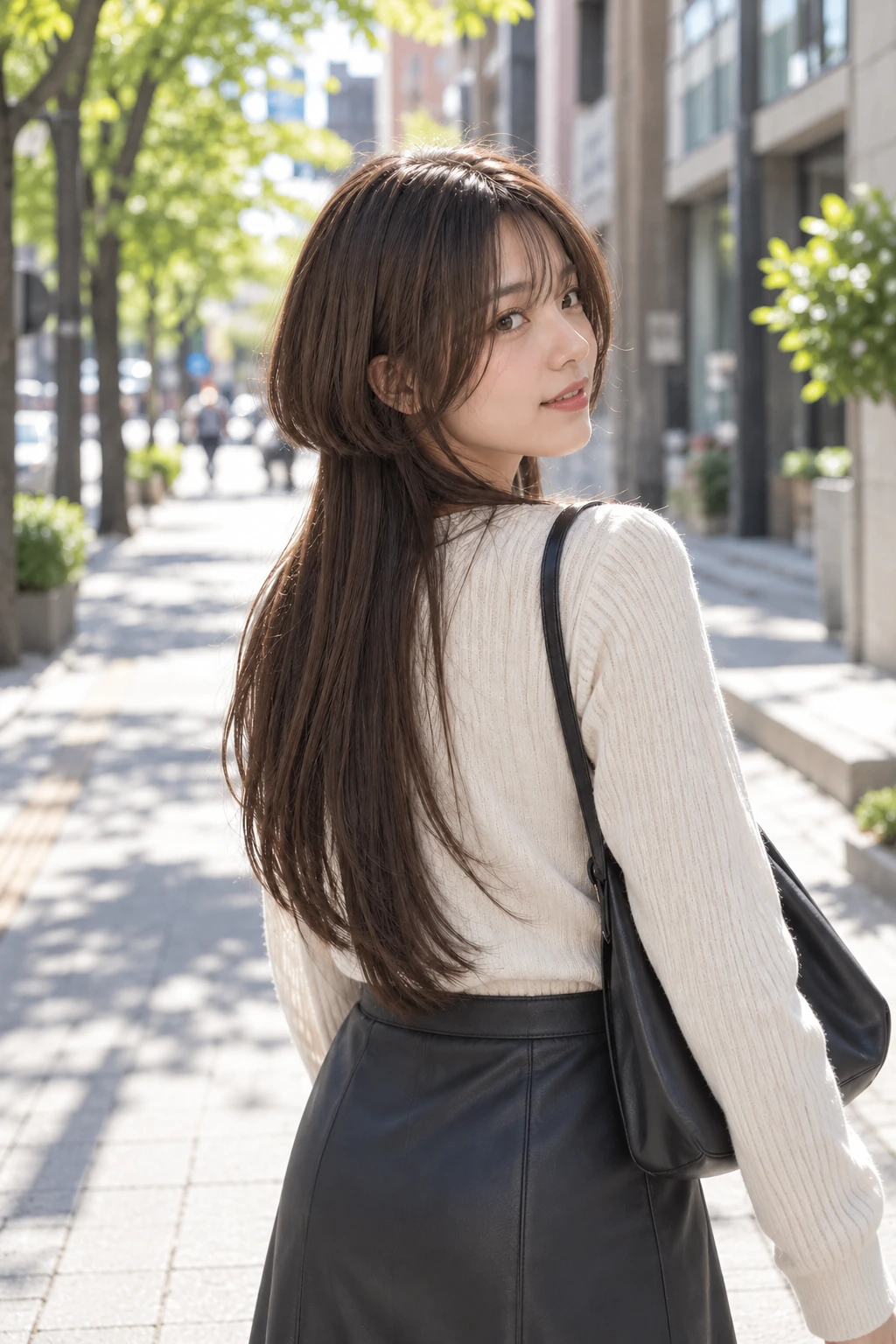 Jellyfish cut
The jellyfish cut carries its short rounded cap around the whole head.
Questions
What are the side pieces in a hime cut called?
They are the blunt side panels that finish near the cheeks or jaw in this reference. Show your stylist their width and endpoint instead of assuming the haircut name defines both.
Can I tie back a long hime cut?
Discuss tying the long lower sections while leaving the shorter panels loose. Whether those panels reach your preferred tie-back depends on the length you choose.
Generated visual references, not tested results. How shopping links work.