The hair edit / The everyday
Easy everyday hairstyles
Loose texture, a half-up clip or a low bun. Find a finish that works with the hair you have.
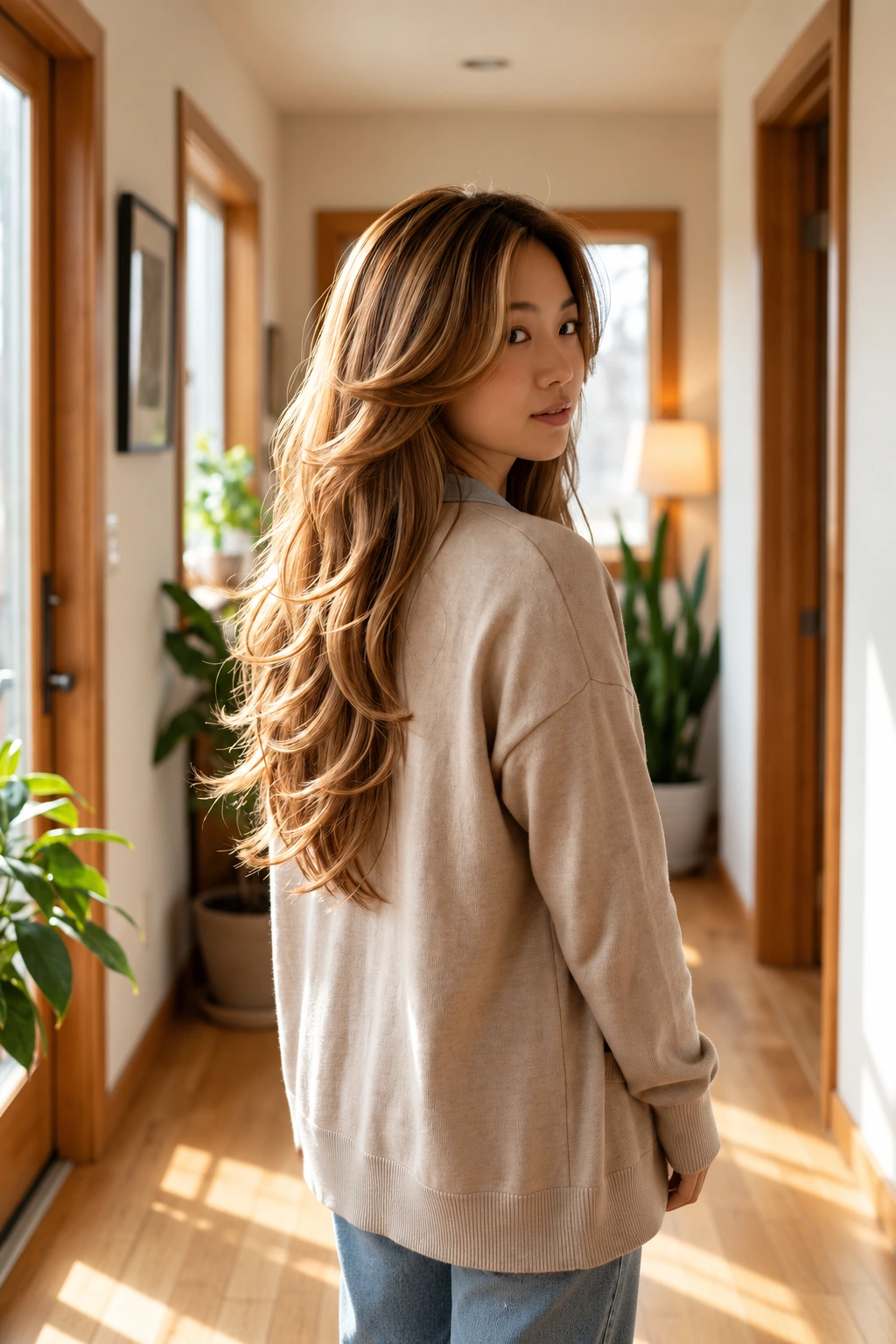
A different kind of hair day
A little lift.
A little less fuss.
Start with how you want to wear your hair: loose, partly gathered or out of the way. The fastening and finish come next.
- Shape: loose lengths, half up or tied back?
- Hold: choose for the amount of hair gathered.
- Finish: use directions for the actual product.
Long butterfly haircut with face-framing layers · one of our 40 cut references
Choose the shape before the accessory
For loose hair, compare the two finishes below: defined shoulder-length curls or broad bends through long layers. If you want the front sections gathered while keeping the length visible, start with the half-up clip. For gathered lengths, compare a low ponytail with a low bun at the nape.
A clip needs enough jaw space for the section it will hold. A tie gathers the ponytail; pins can support a bun. Choose the fastening for the amount of hair gathered, rather than buying every accessory shown across the collection. A half-up section and a full twist can need different clip sizes.
Keep natural texture in the decision. The curl photograph shows a finish to compare, not a promise that cream will create that curl pattern. Likewise, the blowout photograph does not establish which tool, temperature or technique produced it. Follow the directions for the actual device and product you choose.
Compare claw-clip shapes and capacity → · Compare styling methods →
Use these five examples to narrow your choice, or browse the larger everyday hairstyle collection for braids, twists, buns and accessory placements.
What do you need your hair to do today?
Choose a practical starting point, then use the photographs to describe the finish you like.
- Keep the front out of your face
- A half-up fastening gathers the front while leaving the lower lengths loose. Check how much hair the clip must hold; a full-up clip can be unnecessarily bulky for a small section.
- Keep the lengths together
- A low ponytail gathers hair at the nape. Compare a plain tie with a fabric-covered scrunchie, and check that the shorter sections reach the fastening comfortably.
- Keep the ends out of the way
- A low bun contains more of the length than a ponytail. Look at the size of the finished bun and where it sits; pins and a tie serve different fastening roles.
- Wear your texture loose
- Choose a curl or wave reference close to your own starting texture. Decide whether you want a defined or softer-looking finish before comparing styling formulas.
- Show the movement in layers
- A blowout reference shows the direction of the ends and face-framing sections. Compare your current dryer and brush with a hot-air brush before adding another device.
- Work with short front layers
- A small side clip can gather sections that do not reach a ponytail. See the everyday collection for side-fastened and smaller-section alternatives.
Make the choice work with your routine
Start with the hair you have today. Note its length, texture and whether the shorter layers reach your chosen fastening. A photograph with longer hair may be a useful mood reference without being a useful fastening reference.
Check the back as well as the front. Use a mirror to check the placement and loose ends. If the accessory pulls or slips, change the amount gathered or the fastening rather than repeatedly tightening it.
Buy for the missing job. For a ponytail, a suitable tie may be all that is needed. For a bun, consider whether you need pins. A cream, clip and heated tool are not a standard shopping list for every hairstyle.
For product roles beyond the finish, read the wash-day guide. For a different shape that requires a salon visit, use the haircut collection and its salon briefs.
Five finishes to compare
Find a reference for your next hair day
Different lengths and textures; choose a reference close to your own.
-
01 Curls & texture
Shoulder-length loose curls
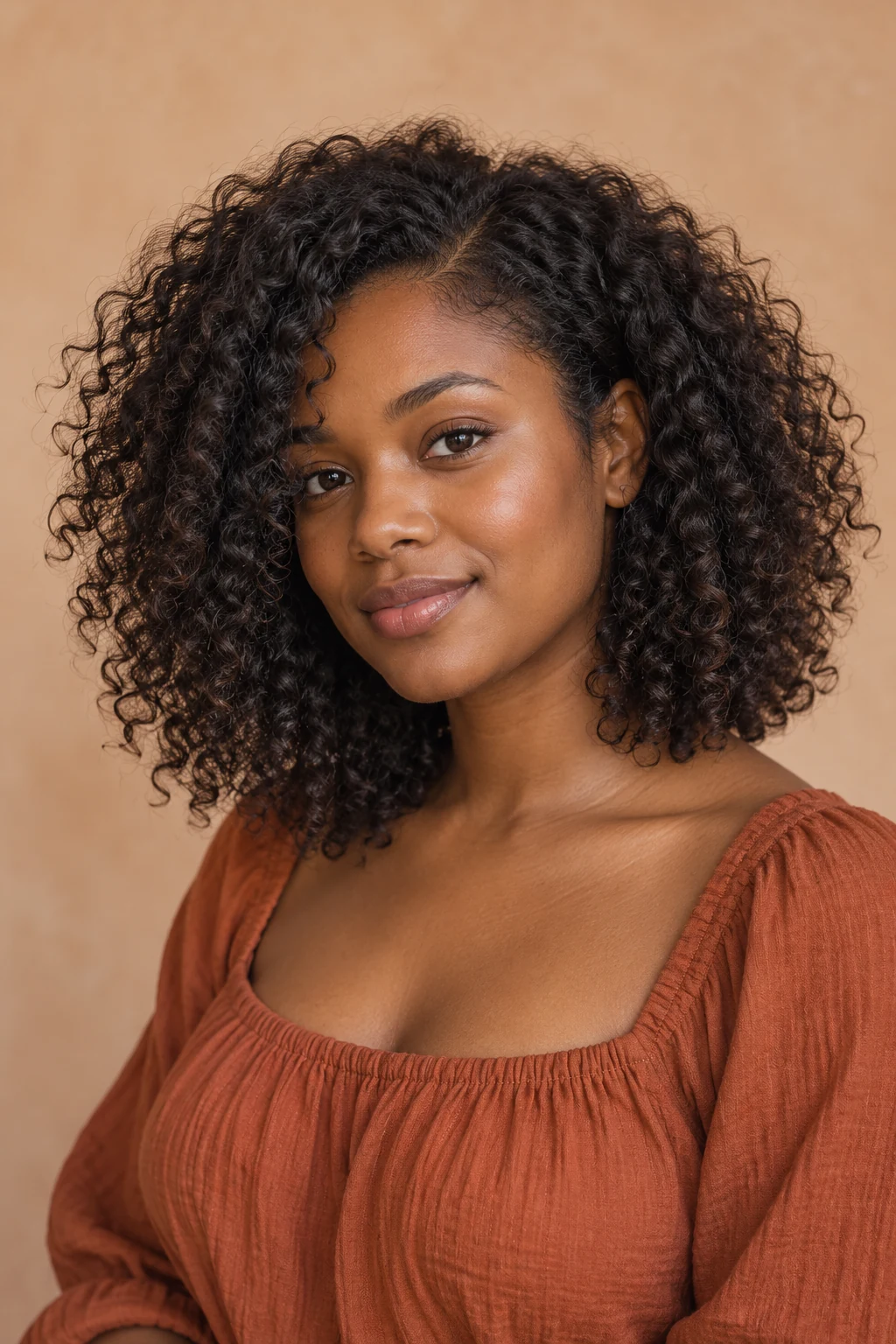
Compare the side part, defined curl clumps and rounded outline. Cream and gel offer different finishes; neither changes a natural curl pattern.
Tools & accessory options
Similar alternatives, not the exact pictured products.
-
02 Loose & flowing
Long layered blowout
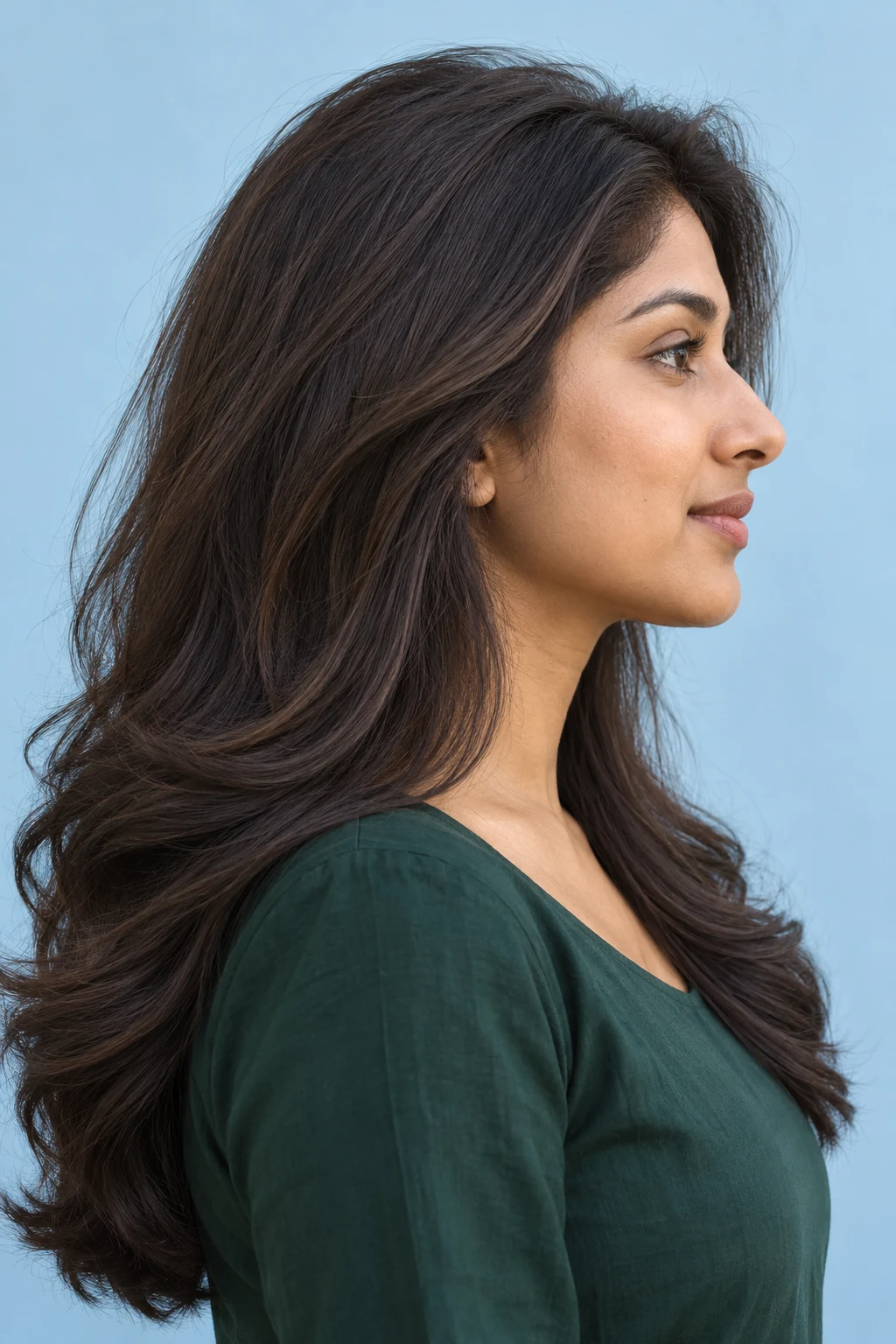
Look for broad bends through the lengths and a side-swept front. Compare tool size and wet or dry use instructions before choosing a styling device.
Tools & accessory options
Similar alternatives, not the exact pictured products.
-
03 Half up
Half-up claw clip
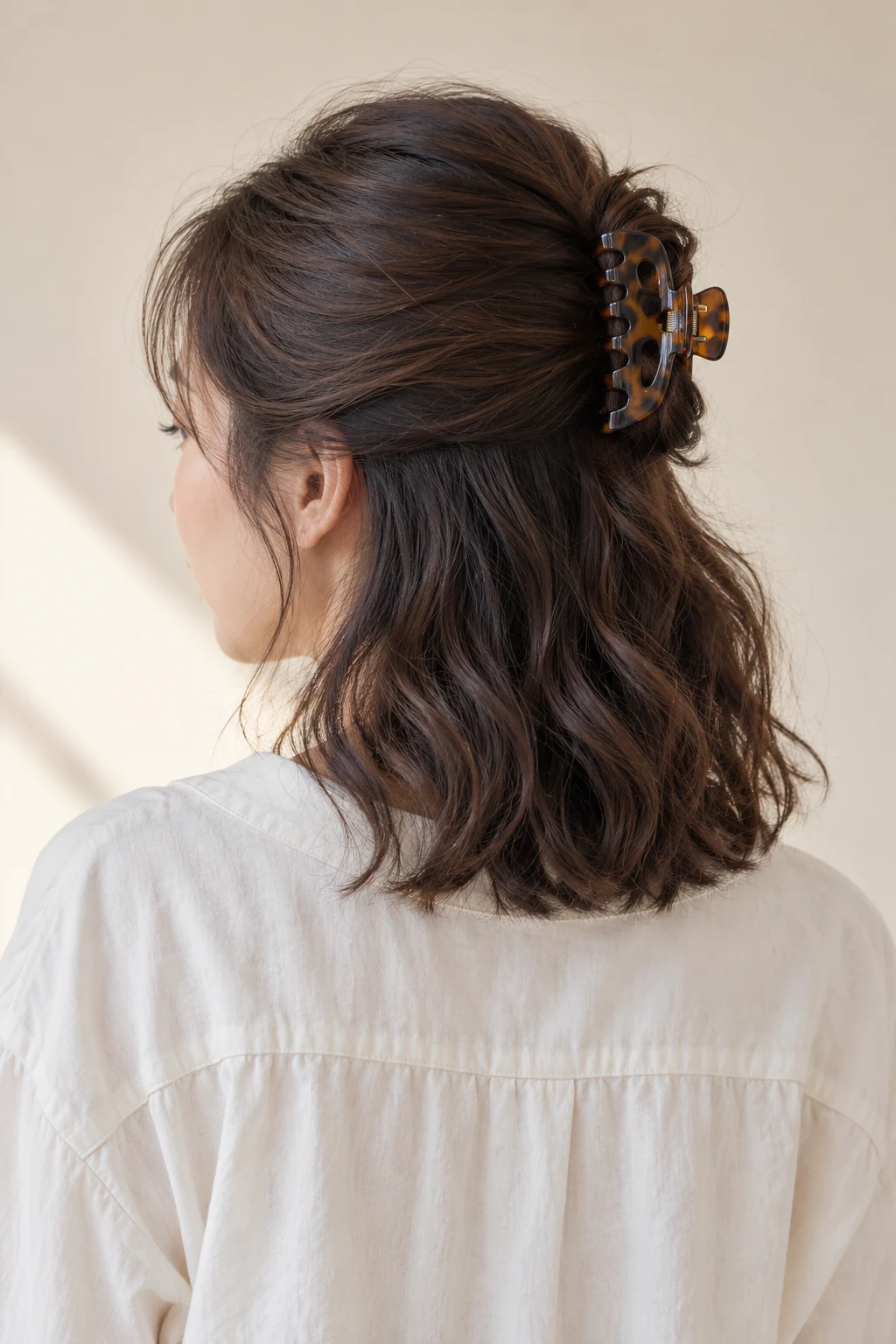
Gather the upper section and leave the lower lengths loose. Choose a clip shape for the amount of hair you want it to hold.
Tools & accessory options
Similar alternatives, not the exact pictured products.
-
04 Tied back
Low ponytail
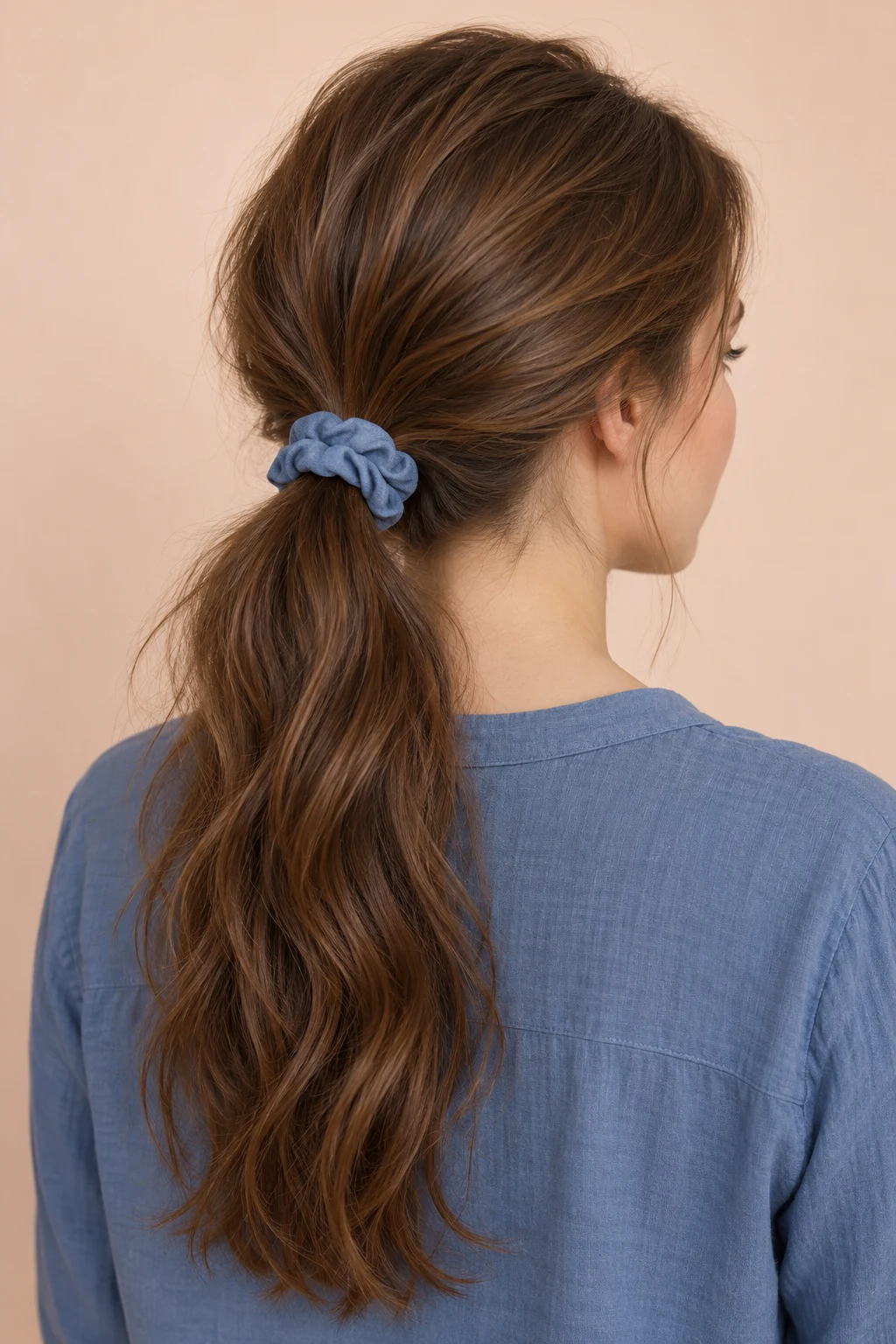
The nape placement defines this look. Choose how loose to leave the front, and compare ties against the amount of hair gathered.
Tools & accessory options
Similar alternatives, not the exact pictured products.
-
05 Tied back
Loose low bun
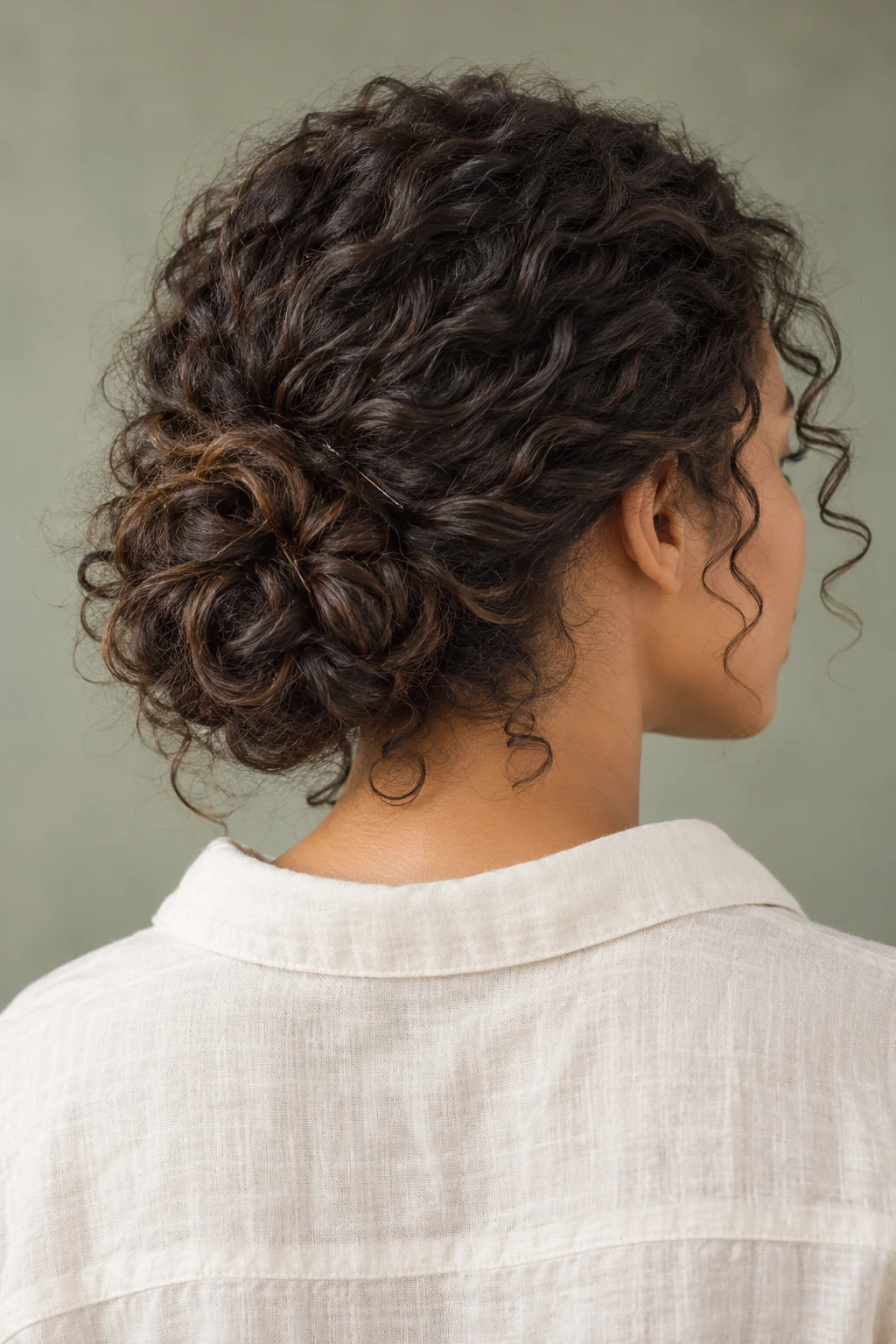
Keep the texture visible around the nape. The fastening is largely hidden here; use this as a shape reference rather than a step-by-step method.
Tools & accessory options
Similar alternatives, not the exact pictured products.
Generated visual references, not tested product results. How shopping links work.