Hair ideas / Wigs & hairpieces
How to fit a wig cap for comfort and secure hold
A wig cap creates a smooth base for the wig, holds your hair in place, and prevents the wig from slipping. The cap works when it sits flat against your scalp and feels secure without being too tight.
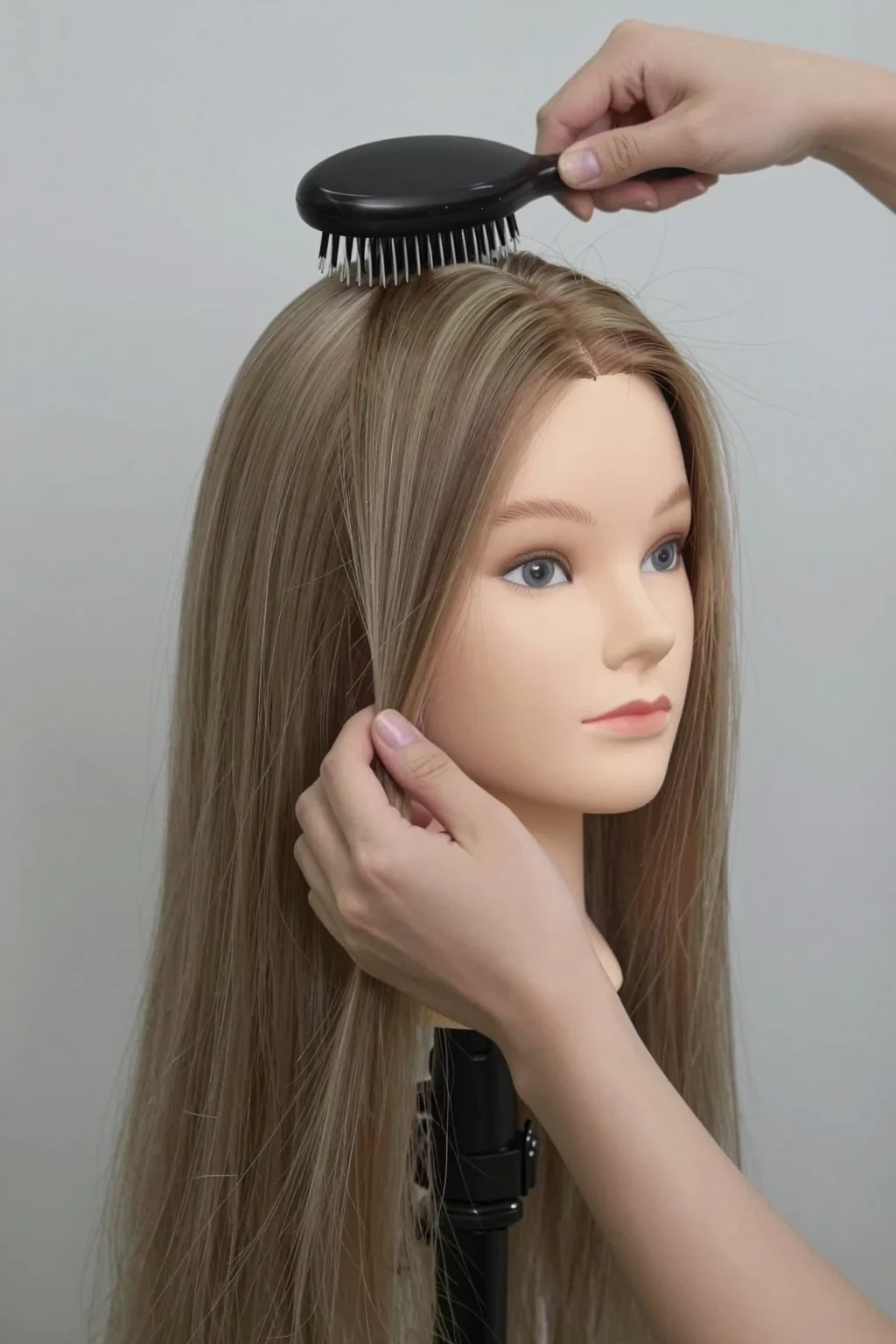
Three rules
Start here.
- Secure your natural hair flat against your head before putting on the wig cap, either by braiding, pinning or smoothing it down, so the cap sits flush without bumps.
- Place the wig cap from your front hairline back over your head to the nape of your neck, pulling it down evenly on both sides so it does not twist or bunch.
- Adjust the cap so it sits just behind your natural hairline and covers all of your hair, with the ear tabs positioned over or slightly behind your ears for a secure fit.
A styling reference, not a product photo.
What defines it
The basics
A wig cap is a thin, stretchy covering worn over your natural hair before putting on a wig. It serves several purposes: it holds your hair flat against your head so the wig sits smoothly, it protects your natural hair from friction and styling product, it helps the wig grip your head and stay in place, and it creates a barrier between your scalp and the wig. Wig caps come in several materials — nylon, mesh, cotton or bamboo — and in neutral colors that match different skin tones.
What makes a wig cap work is choosing the right size and material for your head, securing your hair properly before putting the cap on, and positioning the cap so it sits flat from your hairline to the nape of your neck without bunching or slipping. If the cap is too tight, it can cause headaches. If it is too loose, it will not hold your hair or help the wig stay in place. The cap should feel snug but not uncomfortable, and it should cover all of your natural hair.
This is not the same as the wig base or cap construction, which refers to how the wig itself is made. A wig cap is a separate item you wear under the wig. It also differs from a wig grip, which is a headband-like accessory that helps hold the wig in place — a wig cap covers your hair, while a wig grip sits around your hairline.
Repeatable combinations
Formulas to try
- Basic wig cap placement
- Secure your hair in a low ponytail, bun or flat braids close to your head. Hold the wig cap at the front edge with both hands, place it at your front hairline, and pull it back over your head to the nape of your neck. Pull the sides down evenly so the cap covers all of your hair. Adjust the ear tabs so they sit over or slightly behind your ears. Tuck any loose hair under the cap.
- For long or thick hair
- Divide your hair into two sections and braid each section flat against your head, or twist your hair into two low buns at the nape. Pin the braids or buns flat with bobby pins. Place the wig cap from front to back, pulling it down to cover all of the braids or buns. If your hair is very thick, you may need a larger wig cap or two caps layered for extra coverage.
- For short or fine hair
- Smooth your short hair back with your hands or a brush, or pin it flat with bobby pins if needed. Place the wig cap from front to back, making sure it sits just behind your natural hairline and covers all of your hair. Short or fine hair does not need as much securing before the cap, but make sure no hair sticks out at the hairline or nape.
- Adjusting for comfort
- If the wig cap feels too tight, stretch it gently before putting it on by pulling it over your hands a few times. If it feels too loose, fold the front edge back slightly to create a double layer at the hairline, or use a wig grip under the cap for extra hold. If the cap slides back during the day, adjust the placement closer to your natural hairline before putting the wig on.
- Checking the fit
- Once the wig cap is on, run your hands over your head to check for bumps, lumps or loose hair sticking out. The cap should sit flat and smooth against your scalp. If you feel bumps, remove the cap and re-secure your hair flatter, then put the cap back on. A smooth base makes the wig sit better and look more natural.
Your needs, your plans
Before you choose
- Cap material and comfort
- Nylon wig caps are the most common and least expensive, but they can feel slippery and may cause itching for some people. Mesh wig caps allow more airflow and are cooler in warm weather. Cotton and bamboo wig caps are softer and more breathable but may cost more. Choose a material based on your sensitivity, the weather and how long you plan to wear the wig.
- Cap color and skin tone
- Choose a wig cap color that matches your skin tone so it does not show through the wig or at the hairline. Common colors are beige, brown, black and white. If you are wearing a lace-front wig or a wig with a visible part, the cap color matters more because it may show through. If the wig has a solid cap construction, the cap color is less visible.
- Cap size and stretch
- Most wig caps are labeled as one-size-fits-all and stretch to fit most head sizes. If you have a very small or very large head, look for caps labeled as small, medium or large. A cap that is too tight can cause headaches and discomfort. A cap that is too loose will not hold your hair or help the wig stay in place. If your cap feels uncomfortable, try a different size or material.
- Using a wig cap with a wig grip
- Some people use both a wig cap and a wig grip for extra security. The wig grip sits around your hairline like a headband, and the wig cap goes over your hair and the grip. This combination provides maximum hold and is useful if you have very slippery hair, no hair, or if you are active and need the wig to stay in place. You do not need both for everyday wear, but they can be layered if needed.
From what you own
Build it and repeat it
Start by securing your natural hair close to your head. If your hair is long or thick, braid it into two flat braids or twist it into low buns and pin them flat. If your hair is short or fine, smooth it back with your hands or a brush. Take the wig cap and stretch it slightly with your hands to loosen it. Place the front edge of the cap at your natural hairline, then pull it back over your head to the nape of your neck, pulling the sides down evenly.
Adjust the cap so it covers all of your hair and sits just behind your hairline. The ear tabs should sit over or slightly behind your ears. Tuck any loose hair under the cap. Run your hands over your head to check for bumps or lumps — the cap should feel smooth and flat. If it feels too tight, stretch it gently or try a larger size. If it feels too loose, adjust it forward or use a wig grip underneath for extra hold. Once the cap is comfortable and smooth, you are ready to put the wig on top.
Keep exploring
Related guides
 Wigs & hairpieces
Washing a synthetic wig focuses on cleaning the wig fibers gently with cool water and wig-specific products, while fitting a wig cap prepares your natural hair and scalp as a base before putting the wig on.
 Clips & accessories
Hair scarves are fabric accessories that tie around the head or hair for decoration, while wig caps are functional base layers worn under wigs to hold natural hair flat and help the wig stay in place.
Questions
Do I need a wig cap under my wig?
A wig cap is not required, but it makes wearing a wig more comfortable and helps it stay in place. The cap holds your natural hair flat, protects it from friction, and prevents the wig from slipping. If you have very short hair or no hair, a wig cap also creates a barrier between your scalp and the wig. Most people find that wigs sit better and feel more secure with a cap underneath.
What color wig cap should I use?
Choose a wig cap color that matches your skin tone so it does not show through the wig or at the hairline. Common options are beige, brown, black and white. If you are wearing a lace-front wig or a wig with a visible part, the cap color matters more. If the wig has a solid cap construction, the color is less visible and you can use any neutral tone.
Can I wear a wig without a wig cap?
Yes, you can wear a wig without a wig cap, but your natural hair may show at the hairline or create bumps under the wig. A wig cap creates a smoother base and helps the wig stay in place. If you have very short hair or you are wearing the wig for a short time, you may not need a cap. For longer wear or a more polished look, a wig cap helps.
How do I keep a wig cap from slipping?
Make sure the wig cap is the right size — it should feel snug but not tight. Secure your natural hair flat against your head before putting the cap on, and adjust the cap so it sits just behind your natural hairline with the ear tabs over or slightly behind your ears. If the cap still slips, use a wig grip underneath for extra hold, or try a cap with silicone strips or a rubberized interior for better grip.
Generated references, not tested products. .