Hair ideas / Tools & products
Round brush blowout at home: section size and brush tension
A round brush blowout works when you take sections small enough to dry fully in one pass, keep the brush taut as you pull it through, and let each section cool before moving to the next.
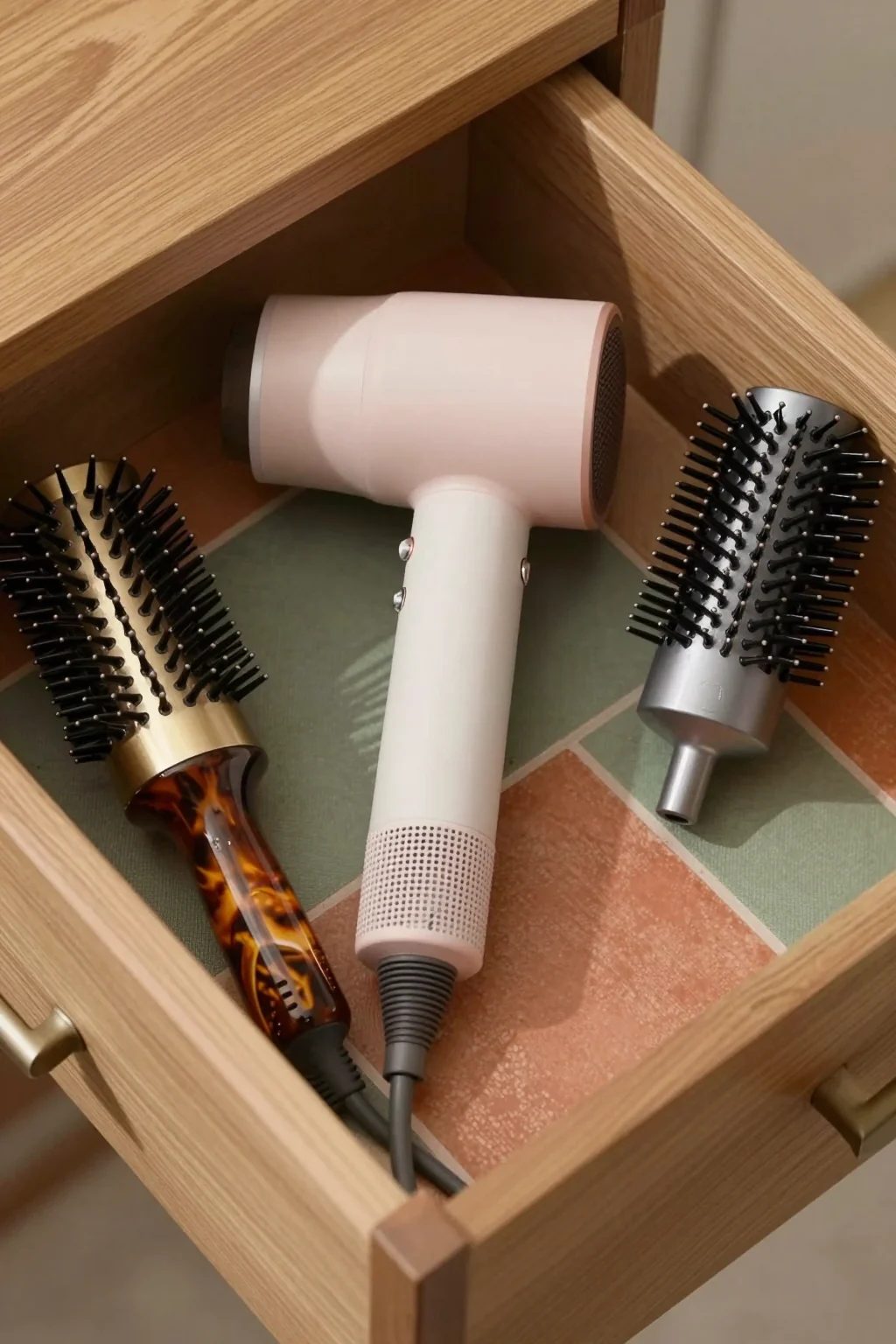
Three rules
Start here.
- Section hair into pieces about two inches wide so each section dries completely in one pass without overheating the outer layers while the inner layers stay damp.
- Keep the brush taut and pull it smoothly down the section while following closely behind with the dryer nozzle pointed at the brush, which creates tension and directs heat where it is needed.
- Let each section cool on the brush for a few seconds before releasing it, which helps the style set and last longer.
A styling reference, not a product photo.
What defines it
The basics
A round brush blowout is a styling technique where you use a round brush and a blow dryer to smooth, straighten and add volume to the hair at the roots. It is the method salons use to create sleek, bouncy styles, and it can be done at home with practice. The technique involves sectioning damp hair, wrapping each section around a barrel-shaped brush, pulling the brush down the length of the hair while directing hot air from the dryer at the section, then letting it cool before releasing. The result is smooth, straight hair with body and movement at the ends.
What makes a blowout work at home is attention to section size, brush tension and heat direction. If your sections are too large, the inner layers will not dry fully and the style will fall flat. If the brush tension is too loose, the hair will not smooth. If the dryer is too far from the brush or pointed in the wrong direction, the heat will not penetrate the section. The goal is to dry each section completely in one or two passes while maintaining consistent tension and heat.
This is not the same as air drying with a brush, which does not create the same smoothness or volume. It also differs from using a flat iron or straightener, which straightens hair after it is dry. A blowout smooths and straightens the hair while drying it, using heat and tension together.
Repeatable combinations
Formulas to try
- Basic round brush technique
- Take a two-inch horizontal section from the crown or sides, place the round brush under the section at the roots, and roll the hair over the brush barrel once. Pull the brush down the length of the hair with tension while directing the dryer at the brush, following closely behind. Pause at the ends, roll the hair under once more, and hold for a few seconds to add a slight bend. Let the section cool on the brush, then release. Repeat on all sections.
- Root lift focus
- For volume at the roots, place the brush under a section at the scalp and lift it straight up away from your head while applying heat at the roots. Hold for a few seconds, then pull the brush down the length with tension. This adds height and body at the crown. Use this technique on the top sections and the crown area.
- Sectioning for thick or long hair
- Divide thick or long hair into four to six sections: two at the crown, two at the sides, and two at the back. Clip each section up except the one you are working on. Start with the bottom back sections and work your way up and forward. This keeps dried sections out of the way and prevents you from redrying already-styled hair.
- Cool shot finish
- After drying each section with heat, switch to the cool shot setting and blow cool air over the section while it is still on the brush. This sets the style and makes it last longer. Once the section is cool, release the brush and move to the next section. This step is optional but adds hold.
- Smoothing the ends
- When you reach the ends of each section, roll the brush under once or twice and hold it in place while applying heat for a few seconds. This creates a smooth, rounded bend at the ends instead of a flat or blunt finish. Let the section cool on the brush before releasing. If you want straighter ends, pull the brush all the way through without pausing.
Your needs, your plans
Before you buy
- Brush size and hair length
- A larger barrel brush (two to three inches) creates looser, bouncier styles and works well on medium to long hair. A smaller barrel brush (one to two inches) creates more curl or bend at the ends and works better on short to medium hair. If your hair is very long, start with a larger brush and switch to a smaller one for the ends if you want more bend. If you are new to blowouts, start with a medium-sized brush around two inches.
- Heat and speed settings
- Use medium to high heat and medium speed for most hair types. If your hair is fine or damaged, use lower heat to avoid breakage. If your hair is thick or coarse, use higher heat and speed to dry it efficiently. Always use a concentrator nozzle on the dryer to direct the heat precisely at the brush. Test the heat on your hand before pointing it at your hair — if it feels uncomfortably hot, lower the setting.
- Damp versus wet hair
- Start with hair that is about 70 percent dry, not soaking wet. Towel dry or rough dry with the blow dryer first to remove excess water, then begin the round brush blowout. If you start with soaking-wet hair, it will take much longer to dry and you may overheat some sections while trying to dry others. If your hair is too dry, mist it lightly with water before starting.
- Arm fatigue and timing
- A round brush blowout takes 20 to 40 minutes depending on hair length and thickness, and it requires holding your arms up for extended periods. If you are new to the technique, your arms may tire quickly. Take breaks between sections if needed, and start with just the front or top sections until you build stamina. With practice, the process gets faster and less tiring.
From what you own
Build it and repeat it
Start by washing and conditioning your hair, then towel dry or rough dry it with the blow dryer until it is about 70 percent dry. Apply a heat protectant spray to all sections. Section the hair into four to six parts and clip them up except for the section you are starting with. Begin with the back sections or the sections that dry slowest. Take a two-inch horizontal section, place the round brush under it at the roots, and wrap the hair over the brush barrel.
Hold the brush taut and pull it down the length of the hair while following closely behind with the dryer nozzle pointed at the brush. Move steadily and smoothly without stopping until you reach the ends. At the ends, roll the brush under once or twice and hold it in place with heat for a few seconds to create a bend. Let the section cool on the brush for a few seconds, then release it. Repeat on all sections, working from back to front and bottom to top. Finish with a cool shot over the entire head to set the style.
Shop the pieces
5 tools & products pieces
Links open similar items, not the pictured ones.
-
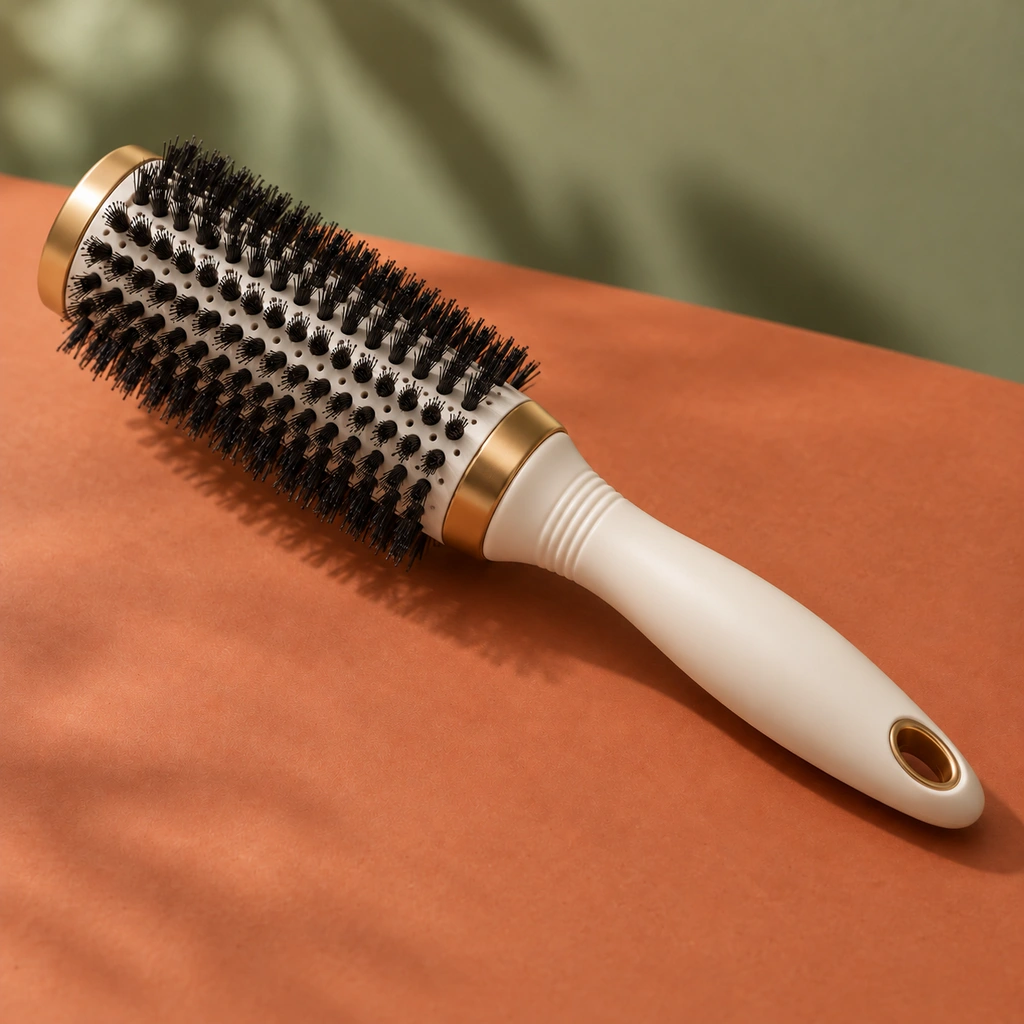
AIMIKE NaturaVol manual round brush, 1.7-inch barrel
What to check
Similar manual vented round brush, used with a separate dryer; it is not an electrical blow-dry brush. The selected barrel is 1.7 inches, about 2.5 inches including bristles, intended for shoulder-length to long hair. The generic illustration also uses white and gold; it does not establish the actual brand or barrel dimensions. Keep a hot barrel away from skin. Review feedback includes some durability concerns; inspect the brush before use.
-
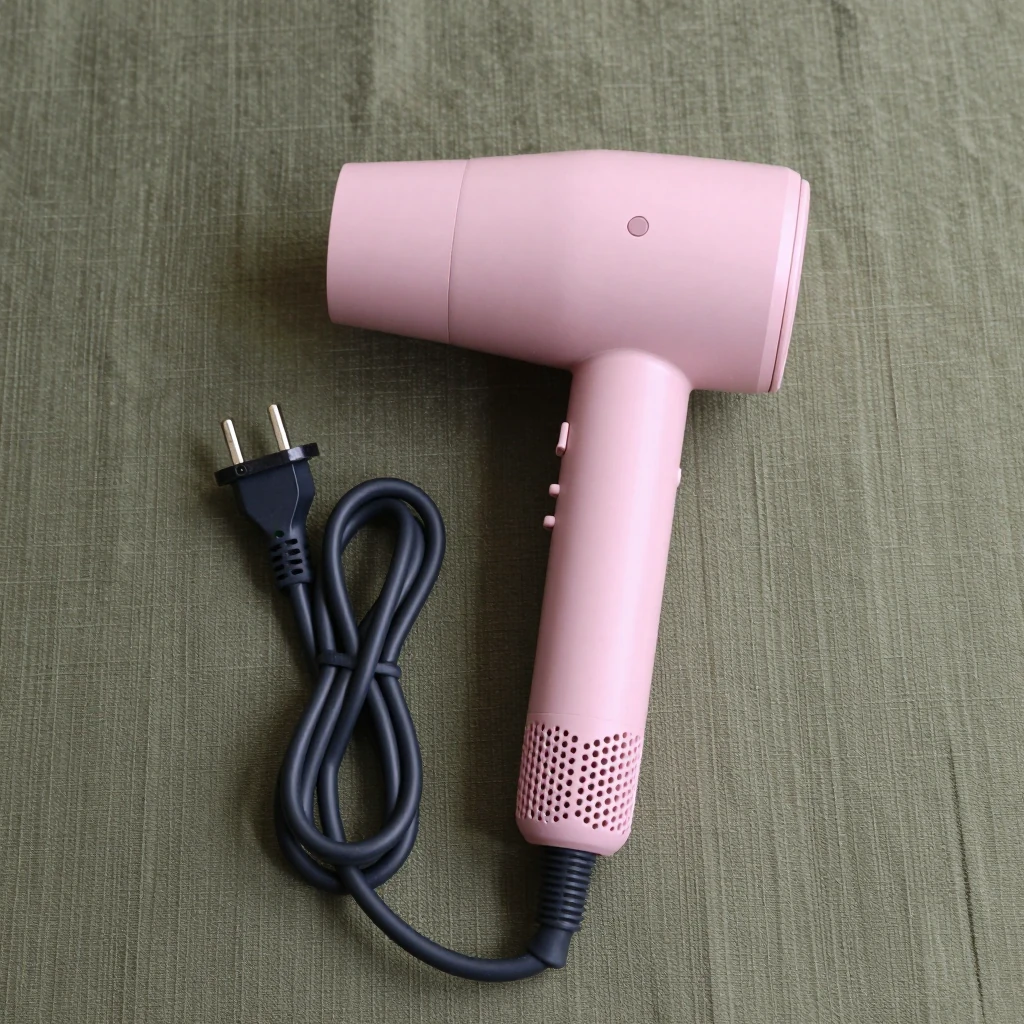
AINA pink dryer with diffuser and concentrator, 110 V edition
What to check
Similar pink dryer supplied with its own concentrator, finger diffuser and comb attachment. The selected listing is the 110 V edition; check the appliance label and your local electrical supply. This is not a dual-voltage claim. The square item illustration shows a pink dryer only; its shape and plug do not establish the actual appliance or electrical compatibility. Included attachments are matched to this dryer, not promised to fit another brand.
-
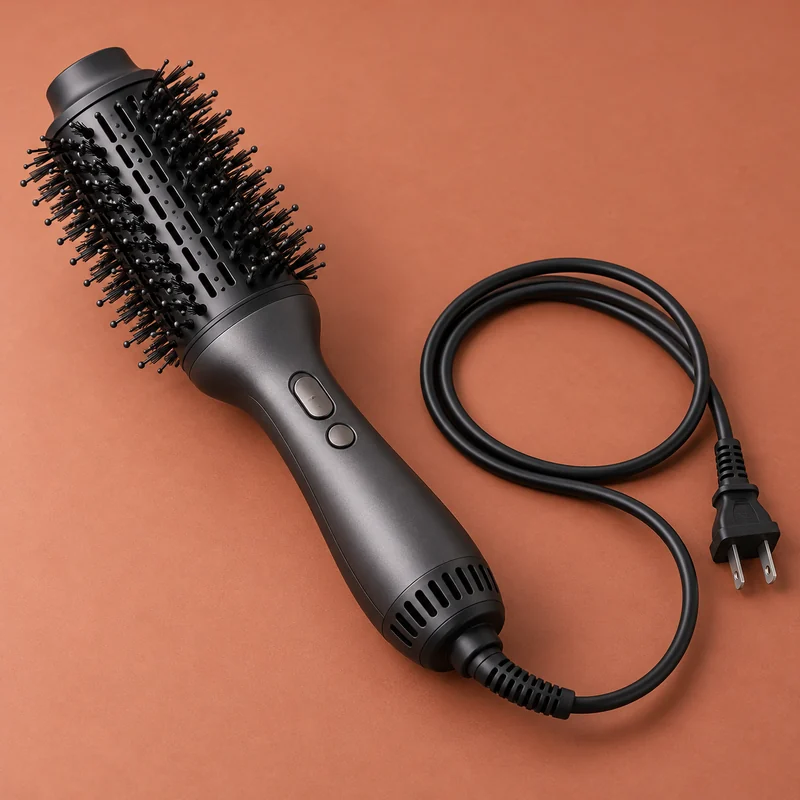
REVLON One-Step Volumizer Plus, black 2.4-inch oval brush
What to check
Similar hot-air brush with a 2.4-inch oval head; it is not a round manual brush or a clamp iron. Listed as 120 V. Compare head size with your length and follow the manufacturer instructions for damp-to-dry use; check local electrical compatibility. Its own head detaches for storage; the complete appliance is linked, not a universal replacement head. Do not fit the pictured unbranded attachment to this appliance.
-
CHI 44 Iron Guard thermal protection spray, 8 fl oz
What to check
Similar heat-protection spray, not the unbranded amber illustrated bottle. Follow the current bottle directions before using a heated tool, and allow hair to reach the dryness required by that tool. Fragrance and finish may not suit everyone; review feedback on stickiness and dryness is mixed. Protection claims do not make high heat harmless.
-
Wet Brush Original Detangler, Pink Frost
What to check
Similar cushioned detangling brush in Pink Frost, with an oval head rather than the broad illustrated paddle. Choose for gentle section-by-section detangling; it is not a heated styling tool or automatically suitable for every wig fiber. Follow the brush and hairpiece directions. Some review feedback concerns durability.
Keep exploring
Related guides
 Tools & products
A diffuser dries curly hair by dispersing airflow and preserving the curl pattern, while a round brush blowout uses tension and concentrated heat to smooth and straighten hair while drying it.
 Everyday styles
Heatless curls create texture and waves by wrapping damp hair around a tool and letting it dry without heat, while a round brush blowout uses heat and tension to smooth hair and add volume.
Questions
What size round brush should I use for a blowout?
A medium round brush with a two to three-inch barrel works for most hair lengths and creates volume and a slight bend at the ends. Use a smaller brush (one to two inches) for short hair or tighter curls at the ends. Use a larger brush (three to four inches) for very long hair or looser, straighter styles. If you are new to blowouts, start with a medium-sized brush and adjust based on your hair length and the style you want.
How do I get volume at the roots with a round brush?
Place the brush under a section at the roots and lift it straight up away from your head while applying heat at the roots. Hold for a few seconds, then pull the brush down the length of the hair with tension. This lifts the roots and creates height. Focus on the top and crown sections for the most noticeable volume.
Why does my blowout fall flat after a few hours?
A blowout falls flat if the hair was not dried completely, if you did not let each section cool before releasing it, or if your hair naturally lacks volume or hold. Make sure each section is fully dry before moving to the next one, use the cool shot setting to set the style, and consider using a volumizing mousse or root-lifting spray before blow drying. If your hair is very fine or straight, the blowout may not last as long without styling products.
Can I do a round brush blowout on curly hair?
Yes, a round brush blowout smooths and stretches curly hair, though it takes longer and requires more tension than on straight or wavy hair. Use a heat protectant and work in smaller sections. The result will be smoother and straighter than your natural curl pattern, but not as flat as a flat iron would make it. If you want to preserve your curls, use a diffuser instead.
Generated references, not tested products. How shopping links work.