Hair ideas / Clips & accessories
Hair accessories for thin hair: lightweight clips, small claws and grippy pins
Thin hair creates a distinct challenge for hair accessories. Standard clips slide right out, oversized claw clips overwhelm a small amount of hair, and heavy metal pins drag the roots down. The right accessories grip securely, distribute weight evenly, and stay hidden where you want them.
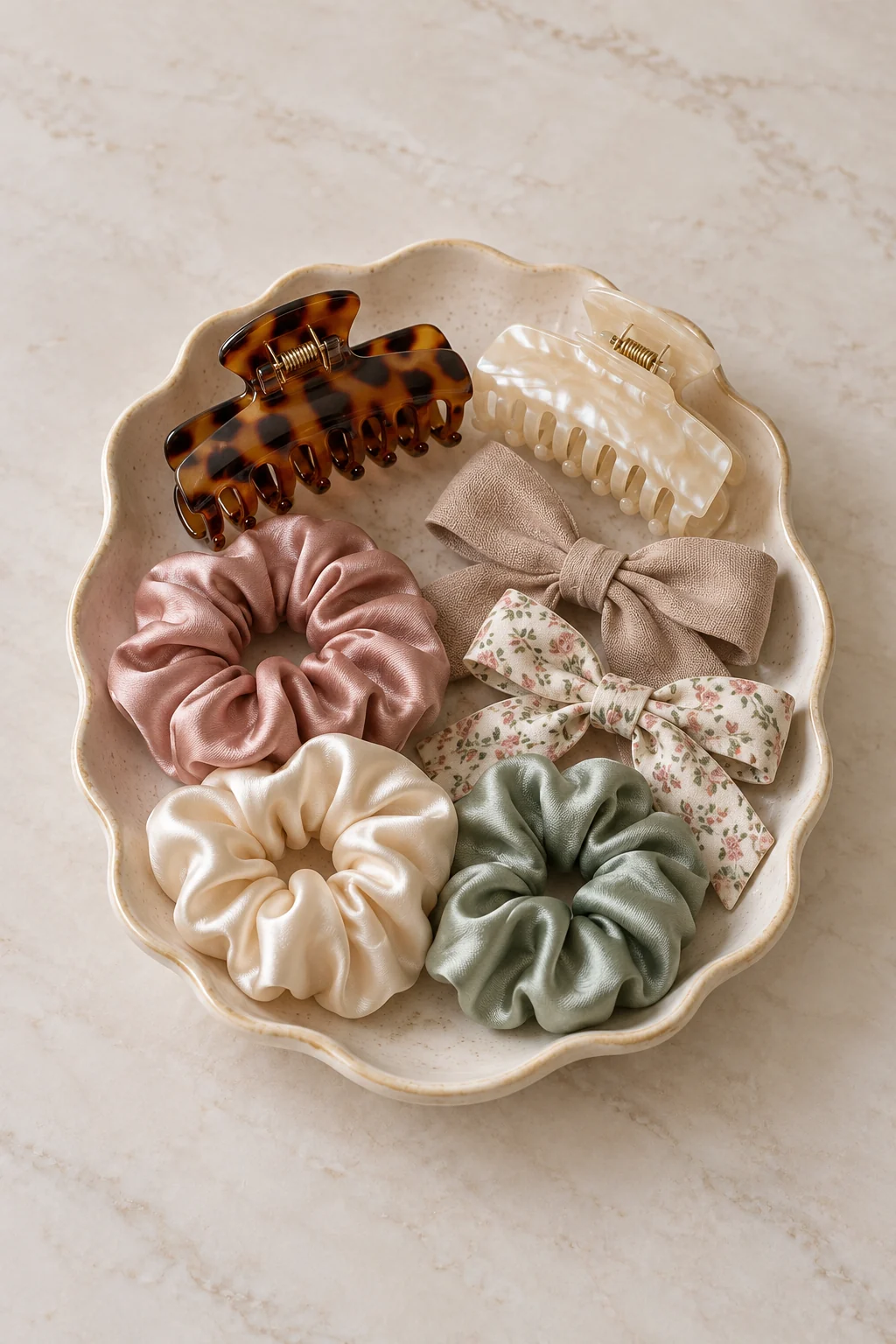
Three rules
Start here.
- Select miniature or midi-sized claw clips with tightly spaced, interlocking teeth that gather small sections securely without leaving large gaps where fine hair can slip through.
- Choose matte-finished, rubberized, or velvet-lined accessories instead of polished metal or slick plastic to help create natural friction that prevents sliding.
- Distribute the weight of any pinned style across multiple smaller pins rather than relying on a single heavy clip that may pull on delicate roots.
A styling reference, not a product photo.
What defines it
The basics
Hair accessories for thin hair refer to specialized styling tools, clips, pins, and bands designed specifically to hold fine or low-density strands without slipping, sliding, or causing tension breakage. Standard accessories are frequently manufactured with wider teeth, heavier weights, or slick metallic finishes that perform poorly when there is less hair volume to anchor them.
What makes an accessory work for thin hair is a combination of scale, surface friction, and weight distribution. Smaller claw clips with interlocking teeth catch short layers and fine strands securely. Pins with coated tips or matte textures may create physical friction against the hair cuticle to help prevent sliding. The goal is to provide enough structural support to hold a half-up style, twist, or bun without pulling the scalp or making thin sections look sparser.
This is not the same as accessories for short hair, though the two categories frequently overlap. Short hair requires accessories that can capture cropped lengths, whereas thin hair requires accessories that compensate for a lack of density and grip. An accessory that works well for thick, short hair may still slide out of thin, short hair if the teeth are too widely spaced or the spring mechanism is too strong for the small amount of hair inside.
Repeatable combinations
Formulas to try
- Mini claw clip half-up twist
- Gather a small section of hair from above each ear and twist the back gently before securing it with a 1.5-inch matte claw clip. Ensure the teeth catch hair from both sides of the twist rather than just the surface layer. This keeps the clip anchored close to the head so it does not sag or pull.
- Flattened bobby pin cross technique
- Slide a bobby pin into the hair with the wavy side facing down against the scalp for maximum grip. Cross a second pin over the first to form an 'X' shape that locks fine sections in place. For very slippery hair, spray the pins with a light dry texture spray before insertion to improve hold.
- Fabric-wrapped elastic ponytail anchor
- Swap rubber bands and bare elastic hair ties for seamless, fabric-covered scrunchies or cotton elastics that may help reduce catching or tearing on fragile strands. Wrap the elastic snugly around the base of the ponytail just enough to hold it in place without creating excessive tension or sharp creases at the crown.
- Flexible wire headband placement
- Position a narrow, fabric-wrapped flexible headband an inch behind the hairline rather than right at the forehead. Gently pull small sections of hair forward over the band to create soft volume and hide the base. The flexible wire adjusts to the exact shape of your head without pinching behind the ears.
- Decorative snap clip placement
- Use small snap clips to pin back side fringe or flyaways by catching a minimal amount of hair so the snap mechanism closes flat. If the clip tends to slide, mist the target hair section with hairspray or texturizing spray and let it dry for thirty seconds before snapping the clip into place.
Your needs, your plans
Before you choose
- Weight and root tension
- Heavy embellishments, large metal clips, and oversized resin claws exert downward pull on fine roots, which can lead to discomfort and gradual hair displacement over the course of the day. Opt for lightweight acetate, fabric, or hollow plastic materials that sit close to the scalp without dragging the hair down.
- Tooth spacing on claw clips
- Large claw clips feature wide gaps between teeth that allow thin sections of hair to slip right through the middle. Look for clips with narrow teeth placed close together, or choose flat jaw clips designed specifically for fine or half-up styles to ensure a secure grip.
- Surface finish and sliding
- High-gloss acrylic and polished metal look sleek, but their smooth surfaces may lack the friction needed to hold onto fine hair strands. Matte finishes, rubberized coatings, and textured fabrics can provide the necessary grip to keep accessories from migrating or falling out.
- Scalp visibility and placement
- Accessories that pull the hair too tight can expose the scalp, especially around the temples and crown. Position clips and pins slightly off-center or incorporate loose texturing techniques so the hair covers the anchor points naturally.
From what you own
Build it and repeat it
Start by evaluating your current collection of hair accessories and separating out any heavy metal clips, slick plastic claws with wide gaps, or bare rubber bands that pull at your strands. Thin hair requires a deliberate shift toward lightweight, high-friction items designed to anchor securely without relying on a large volume of hair for support. Focus first on acquiring a few reliable mini claw clips and matte bobby pins, as these form the foundation for most everyday updos and half-up styles.
Once you have the right accessories on hand, practice placing them using techniques that maximize friction. Use texturizing sprays or dry shampoo to prep fine sections before pinning, and always ensure clips catch enough hair to support their own weight without pulling on the scalp. By pairing the correct accessory size with proper placement, you can wear structured styles all day with reduced slipping, sliding, or scalp exposure.
Keep exploring
Related guides
 Tools & products
Styling tools like blow dryers and flat irons alter hair texture and shape through heat, whereas accessories are external items used to secure and decorate the hair without thermal styling.
 Everyday styles
Hairstyles define the overall cut and configuration of the hair, while accessories are the specific functional items added to those styles to hold sections in place.
 Care & wash day
Hair care focuses on cleansing, conditioning, and scalp health, whereas accessories deal exclusively with external holding items and physical styling aids.
Questions
Why do claw clips always slide out of my thin hair?
Claw clips slide out when the teeth are spaced too widely apart or the clip's surface is too slick, allowing fine strands to slip through the gaps. To help fix this, switch to mini or midi claw clips with closely spaced teeth, choose a matte or rubberized finish, and gather your hair into a slight twist before clipping to give the teeth more surface area to grip.
How can I keep bobby pins from slipping out of fine hair?
Always insert bobby pins with the wavy side facing down toward the scalp, as the ridges may help create physical friction against the hair cuticle. You can also spray the pins with a light texturizing spray or dry shampoo before putting them in, or cross two pins into an 'X' shape to help lock them securely in place.
Are metal hair accessories bad for thin hair?
Heavy metal accessories can pull on fine roots and cause tension breakage if they are too large or heavy. However, lightweight metal bobby pins and snap clips often work well as long as they have smooth, rounded tips and are not clamped down too tightly on fragile sections.
What size claw clip is best for a half-up style on thin hair?
A 1.5-inch to 2-inch mini or midi claw clip is ideal for a half-up style on thin hair. Standard large claw clips are typically too wide and heavy, causing them to sag or fall out because there may not be enough hair volume to fill the mechanism.
Generated references, not tested products. .